بوليفيا مشروع شمس الغد #01 دفعةحبوب البن
المنشأ
- المنطقة: بوليفيا
- الصنف: كاتورا
- المعالجة: Washed process
- التحميص: تحميص متوسط
- الارتفاع: 1600 to 1900 meters
- رقم الدفعة: #01 Batch
- المزارع: Julio Gonzales
النكهة:
Brewing parameters:
15g coffee, 1:15 coffee-to-water ratio, 90°C water temperature, brew in stages, total extraction time 2 minutes.
First pour: 30g bloom for 30 seconds (start timing when blooming begins)
Second pour: slow stream to 125g
Third pour: slightly faster stream to 225g, total time 2’00"
- الرائحة: متوسط
- النظافة: طفيف
- الحلاوة:طفيف
- الحموضة:متوسط إلى قوي
- القوام:متوسط
- المرارة:طفيف
- بعد الطعم:متوسط
- بعد التبريد:متوسط
بوليفيا مشروع شمس الغد #01 دفعةمقدمة حبوب البن:
Tomorrow Sun Project
The Rodriguez family is a key driving force behind Bolivia’s specialty coffee industry and has been leading its continuous improvement. The Rodriguez family has been engaged in coffee cultivation for 30 many years. In recent years, Bolivia’s coffee industry has suffered a severe decline, with production dropping sharply (partly due to government policies encouraging the cultivation of more profitable crops like cocoa, and partly due to the spread of coffee leaf rust in Central America). Nevertheless, the Rodriguez family decisively increased investment in farm infrastructure and coffee cultivation to enhance coffee quality and ensure the sustainable development of Bolivia’s coffee industry in the future.
In recent years, due to low profits from coffee farming and aging coffee plants, many smallholder farmers in Bolivia have begun uprooting their coffee farms to plant cocoa, which offers four times the profit. To prevent these unique flavors from disappearing, the Rodriguez family began helping farmers improve coffee quality and thus increase profits—giving birth to the “Tomorrow Sun” project.
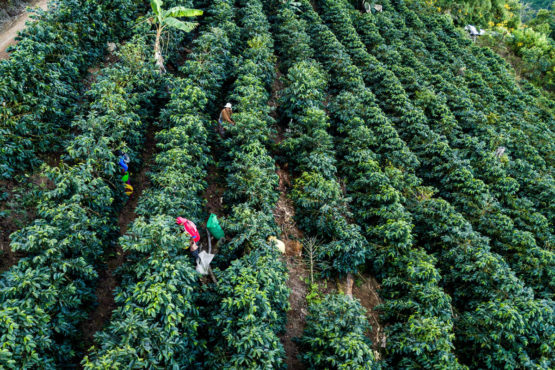
They provide comprehensive technical guidance in variety selection, planting, and harvesting, and have built large-scale processing facilities to assist smallholders with processing, along with subsequent sales and export services. This has significantly boosted smallholder motivation and income levels, safeguarding Bolivia’s rapidly declining specialty coffee industry through concrete actions.
Caturra
Caturra (Caturra) is a natural mutation of (bourbon) Bourbon 1937 discovered in Brazil in
. It has a shorter tree height compared to Bourbon. 700-1750 Caturra thrives at elevations of
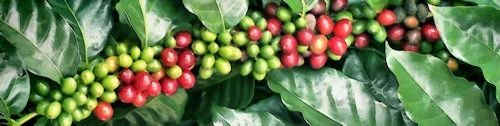
meters, with higher altitudes generally producing better flavors. Its cup profile often features bright fruity acidity and subtle sweetness.
When lightly roasted, Caturra exhibits pronounced acidic aromatics and a vibrant overall profile. With proper processing, its sweetness can be quite impressive, though its body is relatively lighter compared to Bourbon, and its cleanliness in the cup can be slightly lacking.
Caturra is typically red-fruited, but in very rare regions, yellow Caturra can also be found—for example, Hawaii grows a minimal amount of yellow Caturra.
Washed process 13% The washed process involves floating coffee cherries in water to remove underripe or low-density beans. The cherries are then depulped by machine to remove the outer skin and pulp, followed by fermentation to break down the mucilage. After fermentation and washing, the beans are dried in the sun until their moisture content drops to 11% to
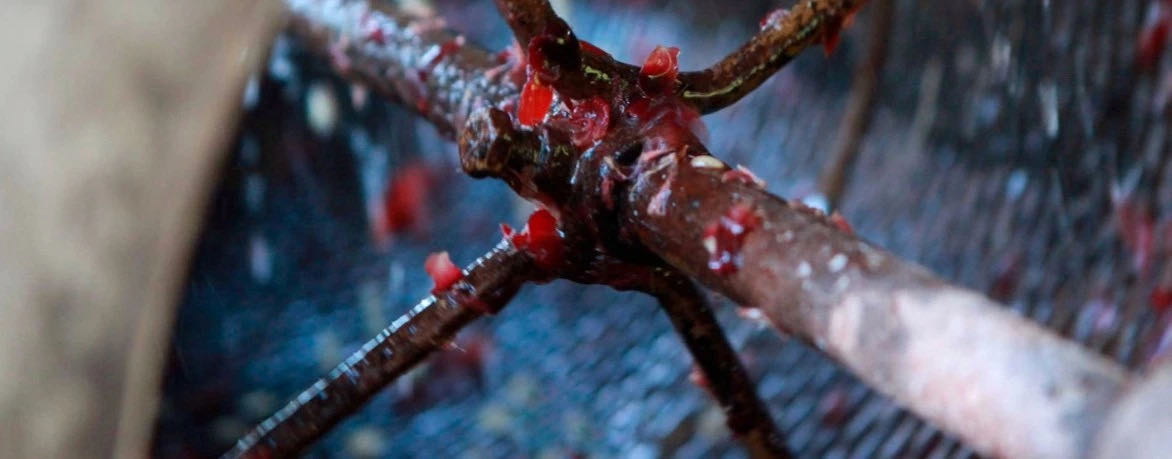
. They are then stored in warehouses until hulling removes the parchment layer just before export.

تابع الحساب الرسمي وأرسلاقرأ المقال كاملاً مجاناً
مقدمة المنطقة:
Bolivia is one of the poorest countries in Latin America, a landlocked nation bordered by Brazil and Colombia. Although it is a country with great potential for coffee exports, its production has always been rather scarce; the conditions for growing coffee are excellent, but the challenges are also extremely daunting, and the result is an exceptionally rich agricultural history built on a very, very difficult land.
Coffee production in Bolivia is dominated by smallholder farming systems; the country has 23,000 small farms ranging in size from 2-9 hectares. What is rather unusual is that roughly 40% or less of Bolivia's coffee culture is oriented toward domestic consumption. Moreover, nearly all of Bolivia's cultivation is done organically.
نصائح التحضير:
weixin_pic_20200422160554.jpg